

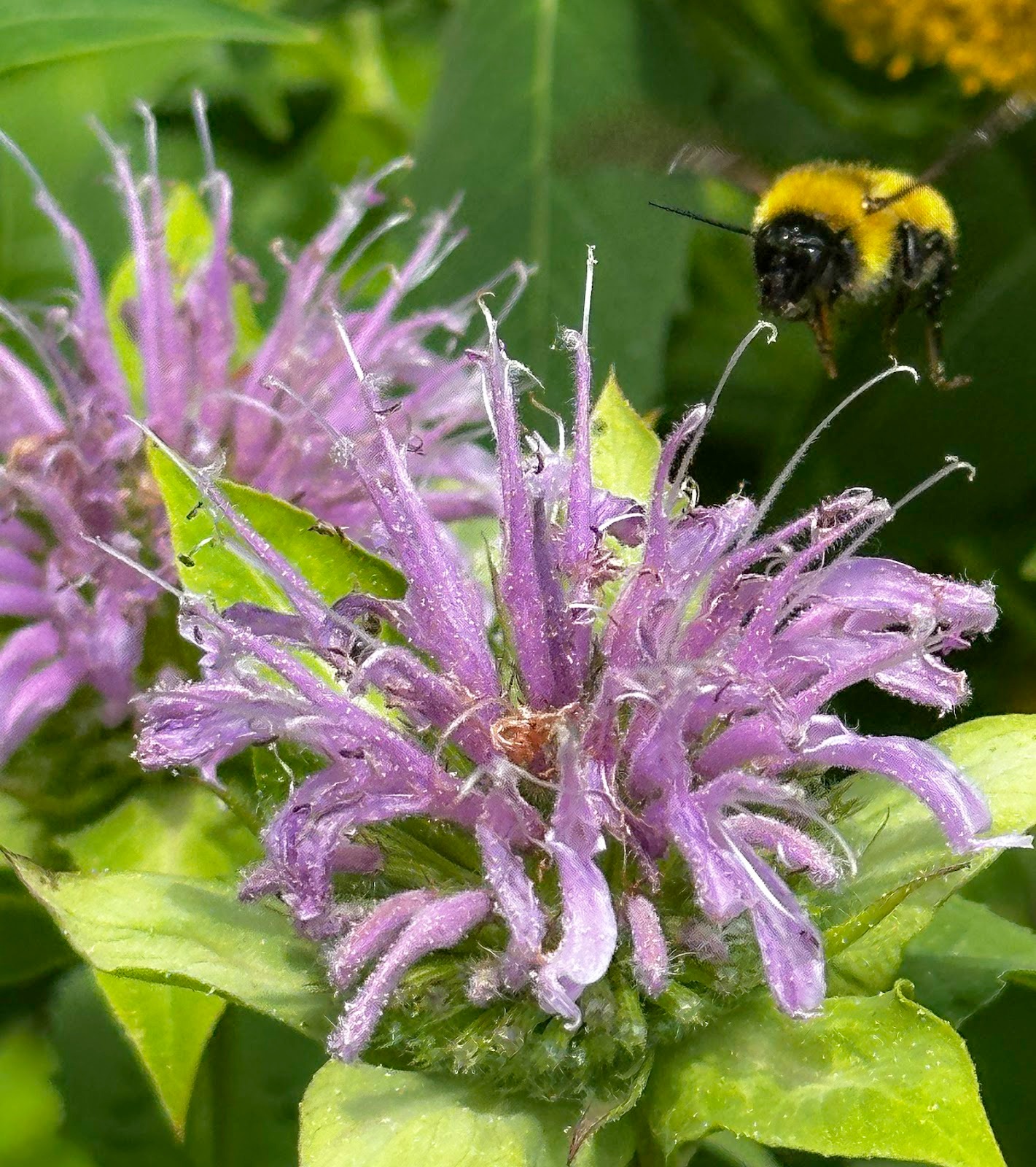
Insect pollinators are critical for thriving ecosystems and resilient food systems. The US Department of Agriculture estimates that 75% percent of the world’s flowering plants and 35% percent of the world’s food crops rely on pollination by animals, most of which is done by insects. Insect pollinators face numerous, extensive threats—one of which is loss of habitat. You can build pollinator habitat in your community and backyard by providing pollinators with food, water, places to nest, and by adopting sustainable management practices.
What makes a space pollinator friendly?
Native plants
Native plants have co-evolved with our landscape and native pollinators for hundreds of thousands of years and typically are more resilient to our region’s climate and provide more benefits to native pollinators.
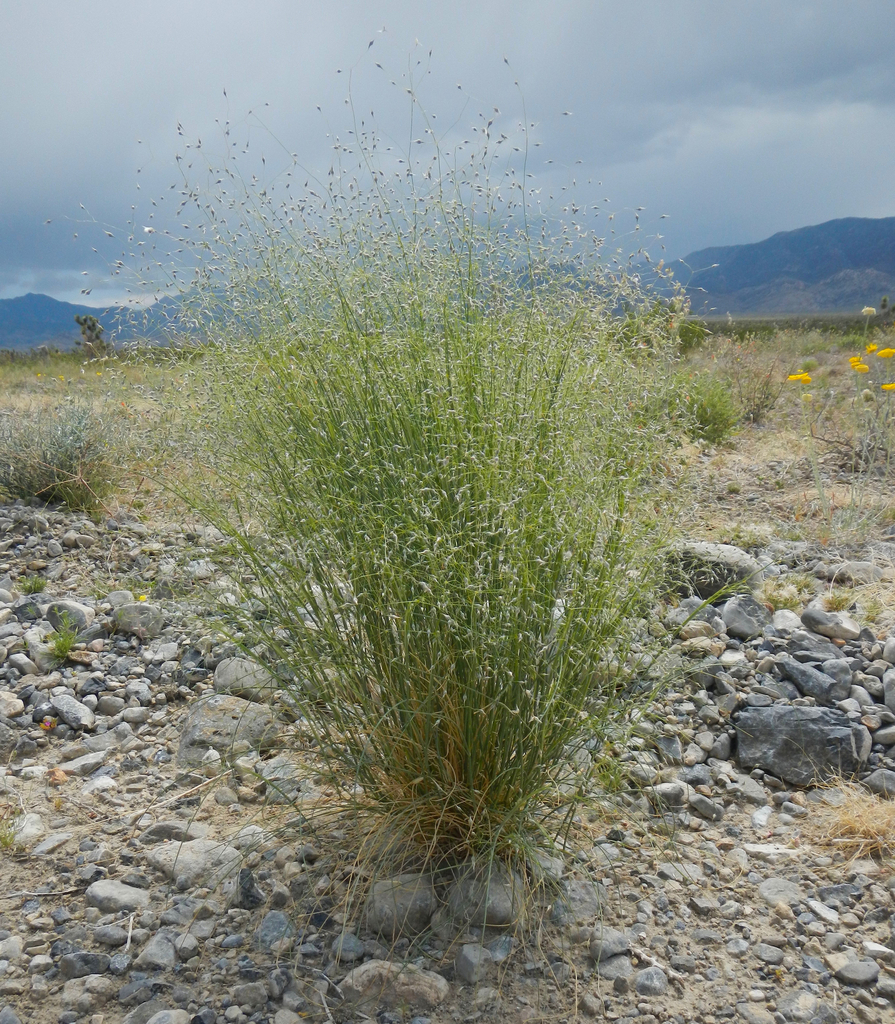
Photo by Dawn Nelson, iNaturalist (CC BY 4.0).
Not just flowers! Grasses, shrubs, and trees provide habitat for insect pollinators. Many are even larval host plants—plants that uniquely support young insects—like this Indian Ricegrass.
Continuous, clustered blooms
Insects need food for themselves and their young all season long. Early bloomers ensure that nectar and pollen are available when insects first emerge, and late bloomers allow insects to bulk up for overwintering. Arrange plants in clusters of at least two to three to help insects see the blooms.
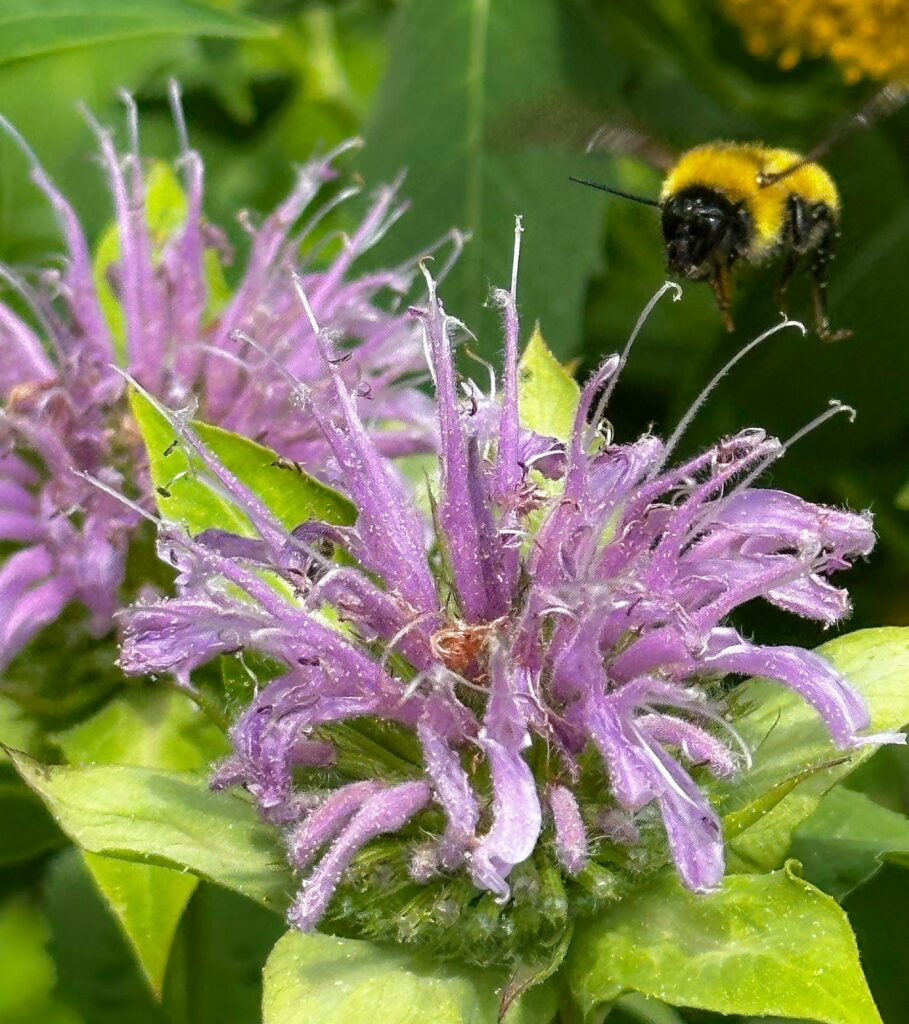
A bee visits a Wild Bergamot (Monarda fistulosa) flower. Photo by Leslie Madsen.
Nesting and overwintering sites
Did you know that most native bees and wasps don’t live in a hive? Most are solitary and nest in the ground, stumps, or hollow stems. Avoid using landscaping fabric which can block access to nesting habitat. Dedicate a portion of your yard to undisturbed soil and dropped leaves, or add stumps, logs, and rock piles to provide habitat.
Our pollinator friends like to sleep in; wait to prune back last season’s growth until late spring so they have a chance to emerge. If you are not ready to embrace a more wild yard, start by leaving the leaves and stems in a small section, contributing to a community garden, or starting a container garden of native plants. Bee a little wild!
Water
Insects need water, too. Provide them with water using a shallow dish or birdbath filled with rocks and a bit of water. It is important to provide rocks for insects to perch on so they do not get their wings wet and drown. Enjoy checking in on your backyard pollinators by changing out or refilling the water every few days. This will keep mosquito larvae away from your watering spot.
Sustainable practices
To ensure a safe environment for your pollinators, avoid pesticides—remember that even organic pesticides can harm beneficial insects.
Pesticides, especially neonicotinoids, are extremely harmful to pollinators. Some insecticides are systemic and can contaminate nectar and pollen, harming insects long past their application. When pesticides are necessary, follow the label, and apply when plants are not in bloom and at times when insects are less active.
Check with your nursery to make sure their plants or seeds are organic.
What is habitat connectivity?
Habitat connectivity provides pollinators with access to food, water, and nesting sites without having to travel long distances. Connected habitat also promotes genetic diversity, which gives future generations a better chance of inheriting traits that help them adapt, survive, reproduce, and successfully adapt to a changing climate with changing migratory patterns. Disconnected habitat requires pollinators to traverse dangerous environments and longer distances for the resources needed to survive.
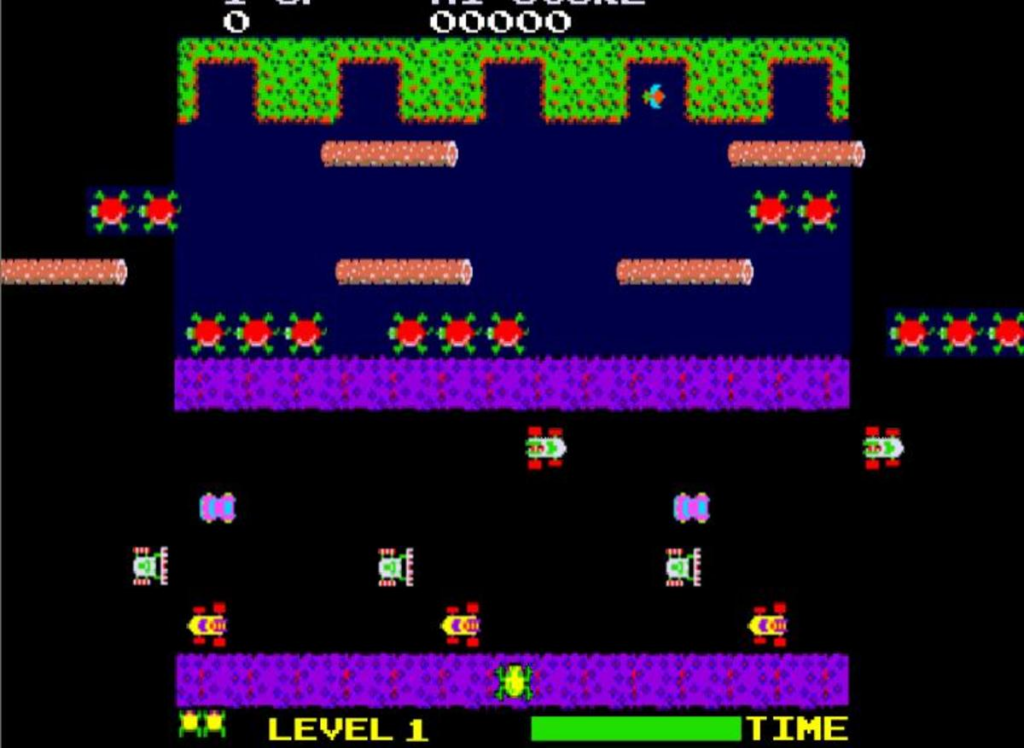
Disconnected habitat means that wildlife has to travel longer distances to get the resources they need to survive. It is a bit like the arcade game Frogger, but for wildlife it isn’t a game—it is life or death.
Every little action to create and improve pollinator habitat helps. A space doesn’t need to have every element. A garden doesn’t have to be big or “perfect”. Every patch added creates habitat, increases connectivity, and contributes to a more biodiverse, resilient ecosystem.
Pollinator Habitat Bingo
Visit a park, public garden, “weedy” roadside strip, community garden, container garden, or your yard and fill out this bingo card. How many squares can you fill out? What would it take to get bingo or to mark off every square?
Flowers in bloom from spring to fall | Native flowers | Leave the stems | Pesticide-free |
Dark-sky friendly lighting | Larval host plants | Undisturbed soil patch | Stumps, logs, or rock piles |
Leave the leaves | Native trees | Native grasses | Water resource |
Native shrubs | Flowers grouped in clusters by species | High plant diversity | Next to other pollinator habitat |
Resources
Native plant lists
Low-water native plants for Western Slope <7000ft
Native Plants for Pollinators & Beneficial Insects: Rocky Mountains
Native Herbaceous Perennials for Colorado Landscapes
Native Shrubs for Colorado Landscapes
Pollinator conservation in your home and community
Pollinator Conservation Resources: Mountain Region | Xerces Society
Get inspired by visiting local public pollinator gardens which you can find on the Pollinator Pathways Map. If you already have a pollinator haven in your space, you can add your site to the map here.